
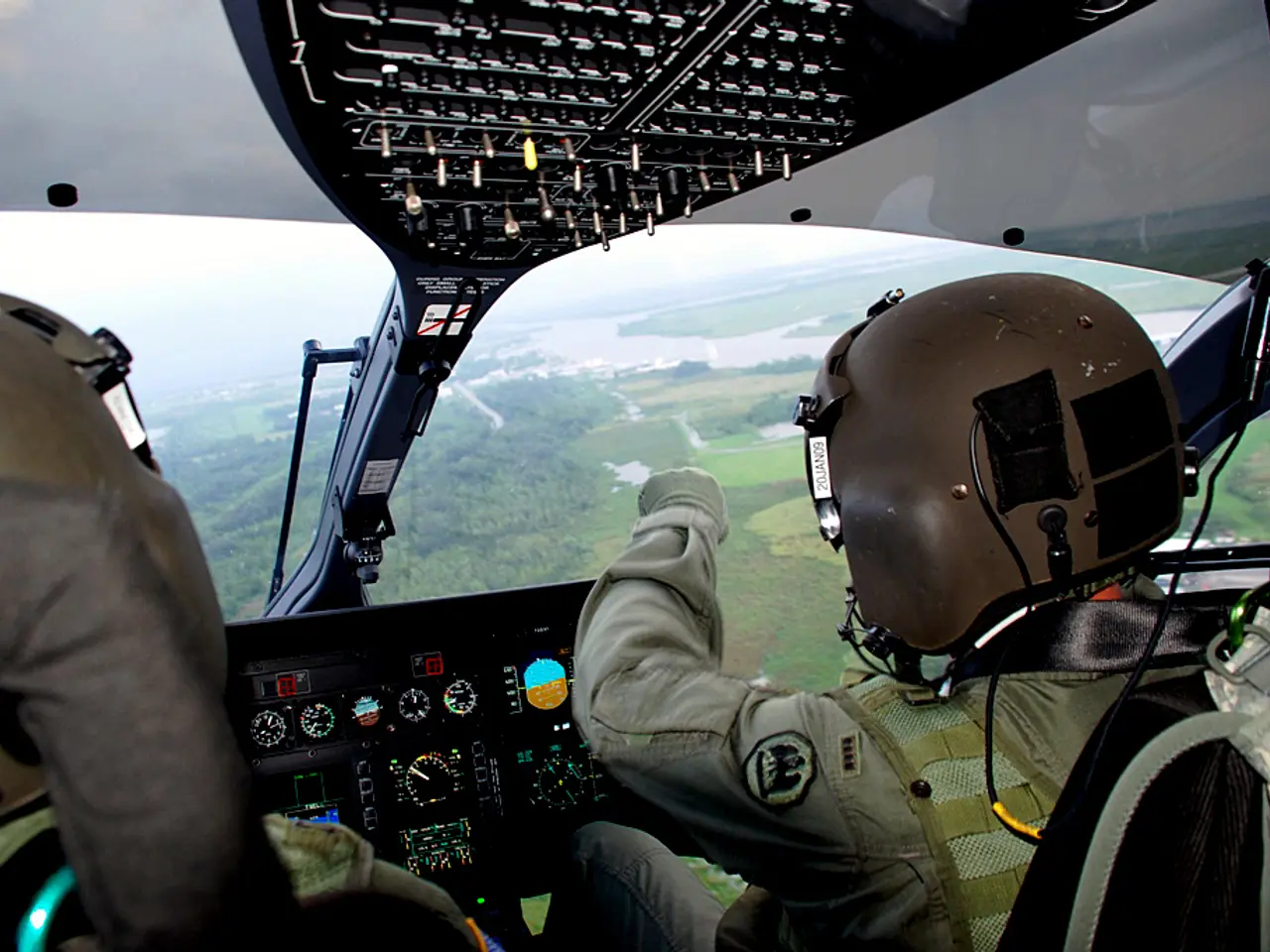
Airbus A320 passengers challenged to simulate landing the plane in the absence of a real pilot
In an intriguing simulation experiment, three 'passengers' were selected at random to land an Airbus A320 airliner. The experiment, conducted by YouTube channel Airliners Lounge in the UK, demonstrated that, in theory, passengers could potentially land an aircraft with assistance.
The aircraft's sophisticated computers allowed the passengers to avoid touching the main flight controls for the most part. However, they had to adjust a few parts of the controls, such as the flaps or throttle levers, due to the aircraft's autopilot.
One passenger accidentally knocked the autopilot off by moving the rudder, causing an alarm to sound. Another passenger pulled the throttle levers back prematurely, causing an issue. Despite these challenges, each passenger managed to line up the A320 for its final approach, and all three aircraft landed safely.
The third passenger's aircraft also landed safely, despite the throttle issue. For the most part, the passengers responded well to the instructions given to them. Each passenger was talked down in the simulator by a genuine Airbus A320 pilot.
Simulator landings by untrained passengers are feasible with detailed step-by-step instructions from ground control or an experienced pilot guiding them through the process. However, experts emphasize that while simulators can simplify controls and situations, the real aircraft's stresses, controls, and need for quick, precise decisions significantly raise the difficulty.
Aviation safety specialists maintain that no verified records exist of unqualified passengers landing a large commercial airliner completely independently in real flight conditions. Therefore, although a simulated Airbus A320 landing by an untrained passenger can technically be done under controlled, guided conditions, such a task remains extremely difficult and risky in an actual aircraft scenario.
The experiment suggests that movies might not be too far from reality in terms of passengers landing an aircraft. However, it's essential to remember that these scenarios are highly controlled and guided by professionals. In real life, the stakes are much higher, and the consequences of error could be catastrophic.
Modern airliners, like the Airbus A320, have sophisticated autopilots that can land the plane. The passengers only had to adjust a few parts of the controls due to the aircraft's autopilot, and the landing gear of the aircraft was successfully deployed by the passengers.
In conclusion, while the experiment provided interesting insights into the potential capabilities of untrained passengers in a controlled environment, it's crucial to remember the significant differences between simulated and real-world scenarios. Aviation safety remains a top priority, and professional training remains essential for pilots to ensure safe flights.
The simulation experiment showcased the potential for passengers to control an Airbus A320 airliner through the aircraft's advanced technology, indicating that this concept might not be too far-fetched in movies. However, the safe landing of the aircraft relied heavily on the autopilot and precise adjustments by the passengers.
Modern technology in aviation, like the sophisticated autopilot system in the Airbus A320, allows for more control by passengers in a simulated environment. Nevertheless, real-world flying conditions are significantly more challenging, requiring quick, precise decisions and professional training for pilots to ensure aviation safety.
Luxury cars and airplanes are both examples of high-end technology that can be controlled with the help of advanced AI systems. While this experiment demonstrates the potential for passengers to land an aircraft with assistance, the need for expert training and adherence to safety protocols cannot be overstated, especially in real-world scenarios.




