
Enhancing forest resilience in the face of a warming climate
AI and Drones Aid in Wildfire Detection and Extinguishing
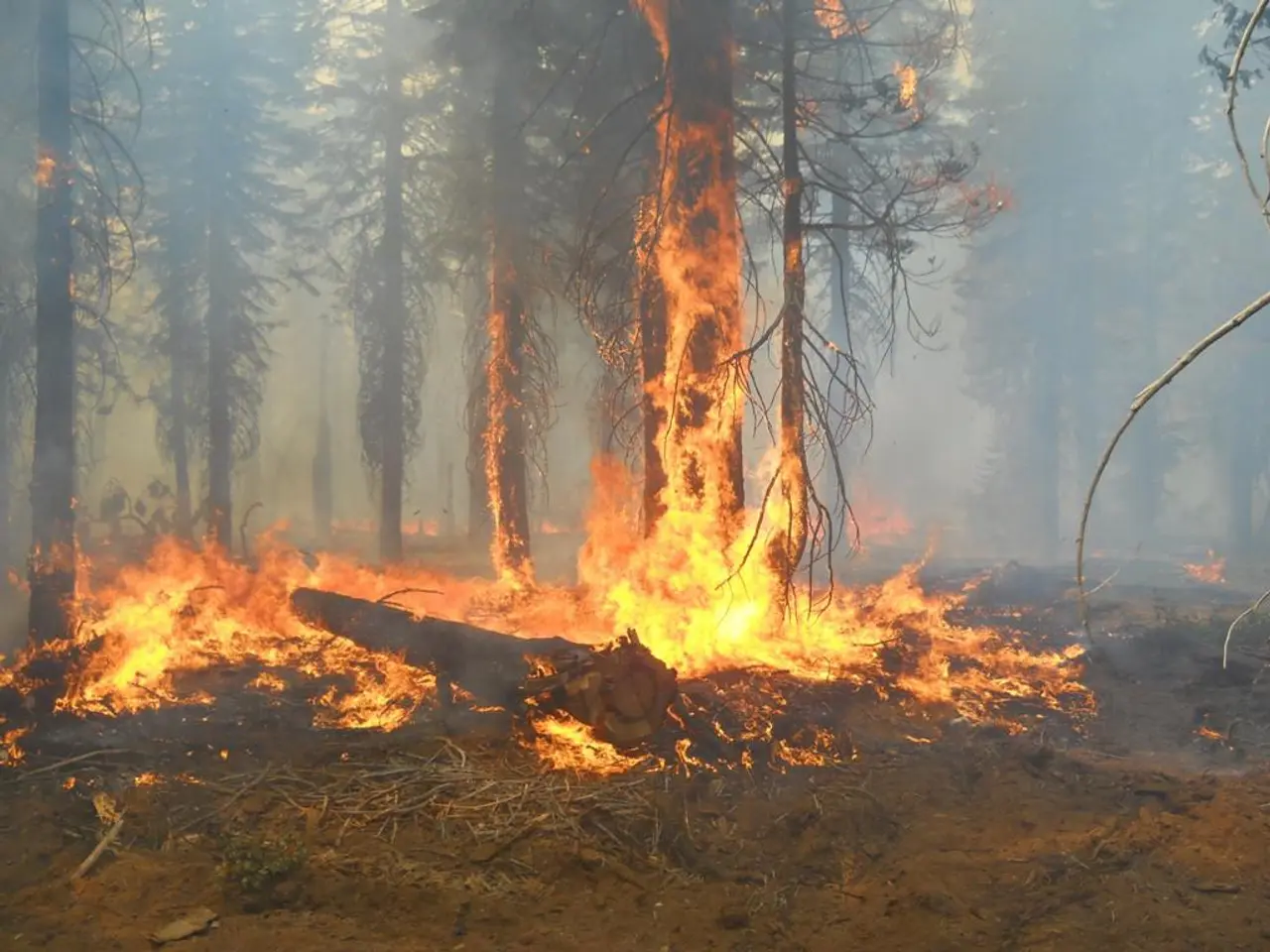
Wildfires, fueled by rising global temperatures and climate change, are becoming more frequent and intense, making faster action crucial in combating these destructive blazes. In an effort to address this issue, AI and drone technology are being employed to aid in the detection and extinguishing of wildfires.
The first AI-controlled autonomous drone system designed to detect and extinguish new fires within minutes is the drone developed by Dryad Networks, nicknamed "Silvaguard." This drone is currently being tested in Brandenburg, Germany, and is set to be launched on the market in 2026, with an initial deployment outside Europe.
The drone uses AI-powered sensors and cameras to provide rapid, autonomous detection of fires. Upon reaching the fire location, it analyzes the situation, thanks to transmitted images of the size and location of the fire. The drone is also equipped with high-resolution optical and thermal imaging, as well as firefighting payloads, allowing for immediate aerial verification and targeted suppression efforts.
In addition to the Silvaguard drone, other systems like SmokeD offer integrated AI and drone solutions, automating detection through sensor networks and providing autonomous drone deployment for inspection and response globally.
The use of AI algorithms enhances detection accuracy and differentiation of high-risk fires, while drones can guide water drops, perform aerial ignition for controlled burns, and drop fire retardants in hard-to-reach areas. This technology has been demonstrated in North America, China, and Southeast Asia, with ongoing research in autonomous wildfire suppression systems.
Traditional methods of firefighting, such as reducing fuel loads in forests and creating firebreaks, remain important in wildfire management. Reducing fuel loads, by removing dry branches or grass, can help make forests more fire-resistant in the short term. Firebreaks, areas kept free of vegetation, can slow or stop wildfires by denying them further material to feed on.
Controlled burning in the cooler months can also help reduce fuel loads, but it is important to note that not all vegetation is equally flammable. Conifers, for example, are more flammable due to their tree resin and the dry grass that often grows beneath them in sparse pine forests. Healthy deciduous forests, on the other hand, are naturally resilient to fire due to their shady environment and non-flammable leaves.
Unfortunately, human activities often contribute to the outbreak of forest fires. Intentional land expansion or unintentional discarding of hot objects can spark fires, especially in regions that were once humid enough to prevent them, such as the Amazon and Indonesia's rainforests. These fires not only destroy valuable ecosystems but also release vast amounts of greenhouse gases, exacerbating global heating.
It is essential to implement new measures, both in terms of preventing and fighting fires, to address the "unstoppable" problem of forest fires. Green firebreaks, planted around population centers and civil infrastructure, can help prevent wildfires. In central Europe, these firebreaks consist of native deciduous tree species.
As fires continue to rage in France and Serbia, it is clear that innovative solutions like AI and drone technology are necessary to combat the increasing threat of wildfires. By providing rapid, autonomous detection of fires, immediate aerial verification, and targeted suppression efforts, these systems deliver real-time situational awareness to emergency responders, enabling faster and more precise responses, reducing the fire spread and damage.
- Rising global temperatures and climate change are causing wildfires to become more frequent and intense, necessitating faster action in their combating.
- AI and drone technology are being utilized to aid in the detection and extinguishing of wildfires.
- Silvaguard, an AI-controlled autonomous drone system developed by Dryad Networks, can detect and extinguish new fires within minutes.
- The use of AI algorithms in such drones enhances detection accuracy and differentiation of high-risk fires.
- SmokeD offers integrated AI and drone solutions, automating detection and providing autonomous drone deployment for inspection and response globally.
- In addition to technology, traditional methods like reducing fuel loads, creating firebreaks, and controlled burning in the cooler months remain important in wildfire management.
- Green firebreaks, planted around population centers and civil infrastructure, can help prevent wildfires, and in central Europe, consist of native deciduous tree species.