
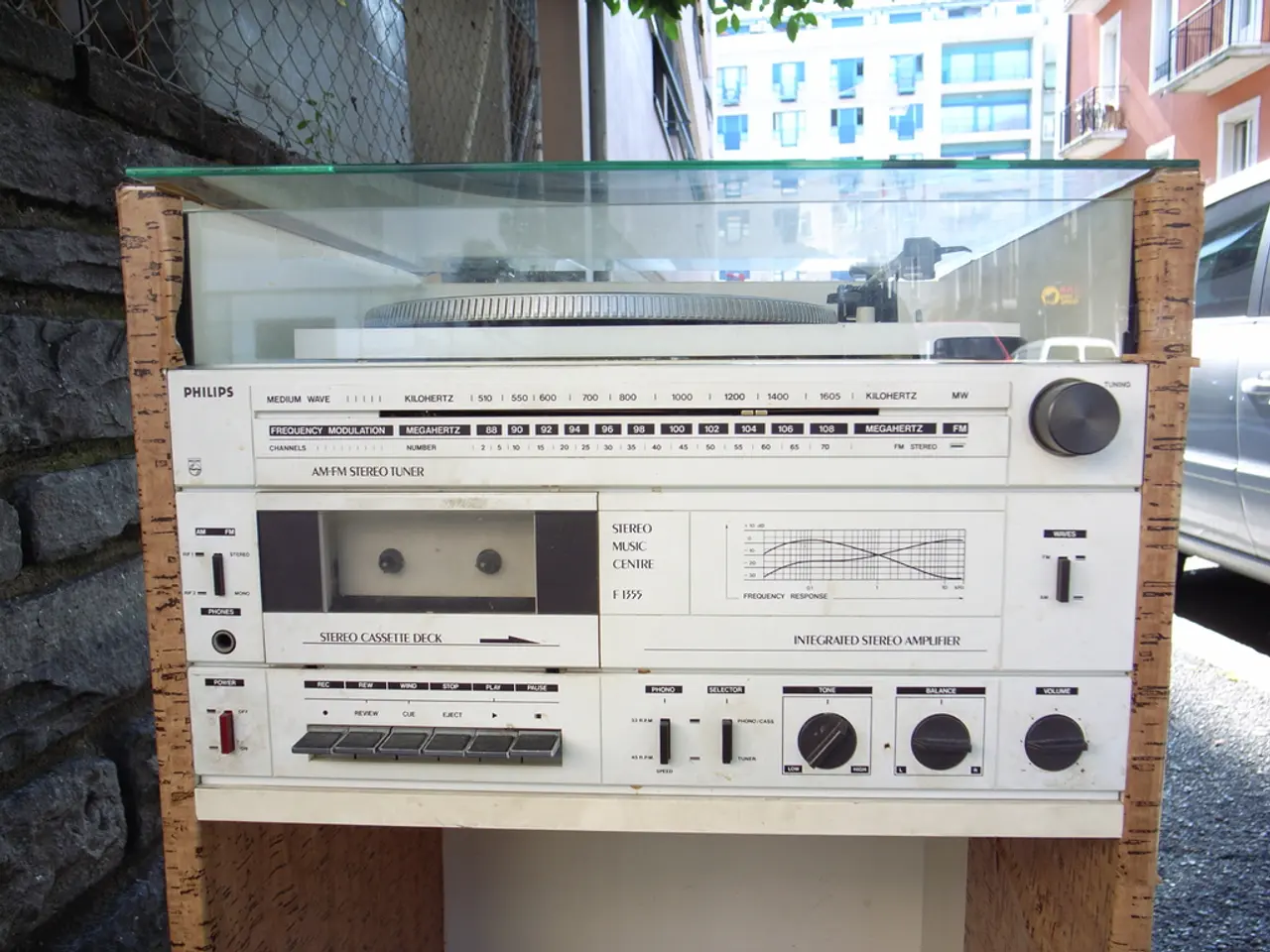
FM radio frequencies are assigned specifically, with some channels ending in odd numbers due to technical reasons. This is primarily to minimize interference between adjacent channels and ensure optimal sound quality.
FM Radio Frequencies in the United States and Europe: A Comparative Look
In the realm of radio broadcasting, two continents, the United States and Europe, have adopted different approaches to FM radio frequency assignments. This difference can be traced back to historical regulatory decisions and spectrum management practices.
In the United States, FM radio stations occupy 200-kilohertz (kHz) slices, starting from an odd number boundary, between 88 megahertz (MHz) and 108 MHz. This spacing, a decision made by the Federal Communications Commission (FCC), allows for sufficient guard bands between adjacent stations to reduce co-channel and adjacent-channel interference, ensuring clearer audio reception and limiting overlap between stations [1].
On the other hand, many European countries follow the European Conference of Postal and Telecommunications Administrations (CEPT) standards, which adopt 100 kHz channel spacing. This tighter spacing reflects different priorities, including the efficient use of the limited available FM spectrum across many neighboring countries with narrower allocated bandwidths and sometimes lower transmitter powers [3]. As a result, European broadcasters operate with less frequency separation but coordinate usage at national and international levels to manage interference.
Here's a summary of the differences:
| Region | FM Channel Spacing | Reason | |-----------------|--------------------|----------------------------------------------------| | United States | 200 kHz | Greater spacing to reduce interference, FCC rules | | Europe | 100 kHz | Denser spectrum utilization, CEPT coordination |
This difference stems from historical regulatory decisions, spectrum allocation strategies, and regional coordination needs rather than technical limitations of the technology itself [1][3].
While FM radio is primarily used for broadcasting radio signals in the United States, it's worth noting that the FCC has allocated different frequencies to various activities, including cell phones, baby monitors, and CB radios. In Europe, FM stations are spaced 100 kHz apart, and they can end on even or odd numbers.
For those interested in delving deeper into the world of radio, here are links to resources:
- United States Early Radio History
- History of American Broadcasting
- National Radio Astronomy Observatory
- Crystal Set Society
In addition, you might find these explanations helpful in understanding various radio-related technologies:
- How Radio Works
- How the Radio Spectrum Works
- How Bluetooth Works
- How Ham Radio Works
- How Radar Detectors Work
- How Satellite TV Works
- How Satellite Radio Works
- How GPS Receivers Work
- How Radio Scanners Work
- How Cell Phones Work
- How does an EPIRB distress radio work?
Finally, you may wonder why you can't use your cell phone on airplanes or in hospitals. These restrictions are due to regulatory decisions aimed at minimising interference with critical communications systems and ensuring passenger safety.
- In the context of technology, historical regulatory decisions have led to different FM radio frequency assignments in the United States and Europe, a point evident in the 200 kHz channel spacing in the U.S. versus the 100 kHz spacing in Europe.
- The Limited available FM spectrum and the need for efficient spectrum utilization across neighboring countries in Europe have resulted in denser spectrum utilization, as opposed to the greater spacing used in the United States to reduce interference.
- The study of radio's history, specifically in the United States, can provide valuable insights into the early stages of broadcasting, as represented by resources like the 'United States Early Radio History' and 'History of American Broadcasting'.
- Regulatory decisions aimed at minimizing interference with critical communications systems have led to limitations on the use of cell phones on airplanes and in hospitals. In the realm of Science and technology, understanding these decisions contributes to the broader understanding of various radio-related technologies.