
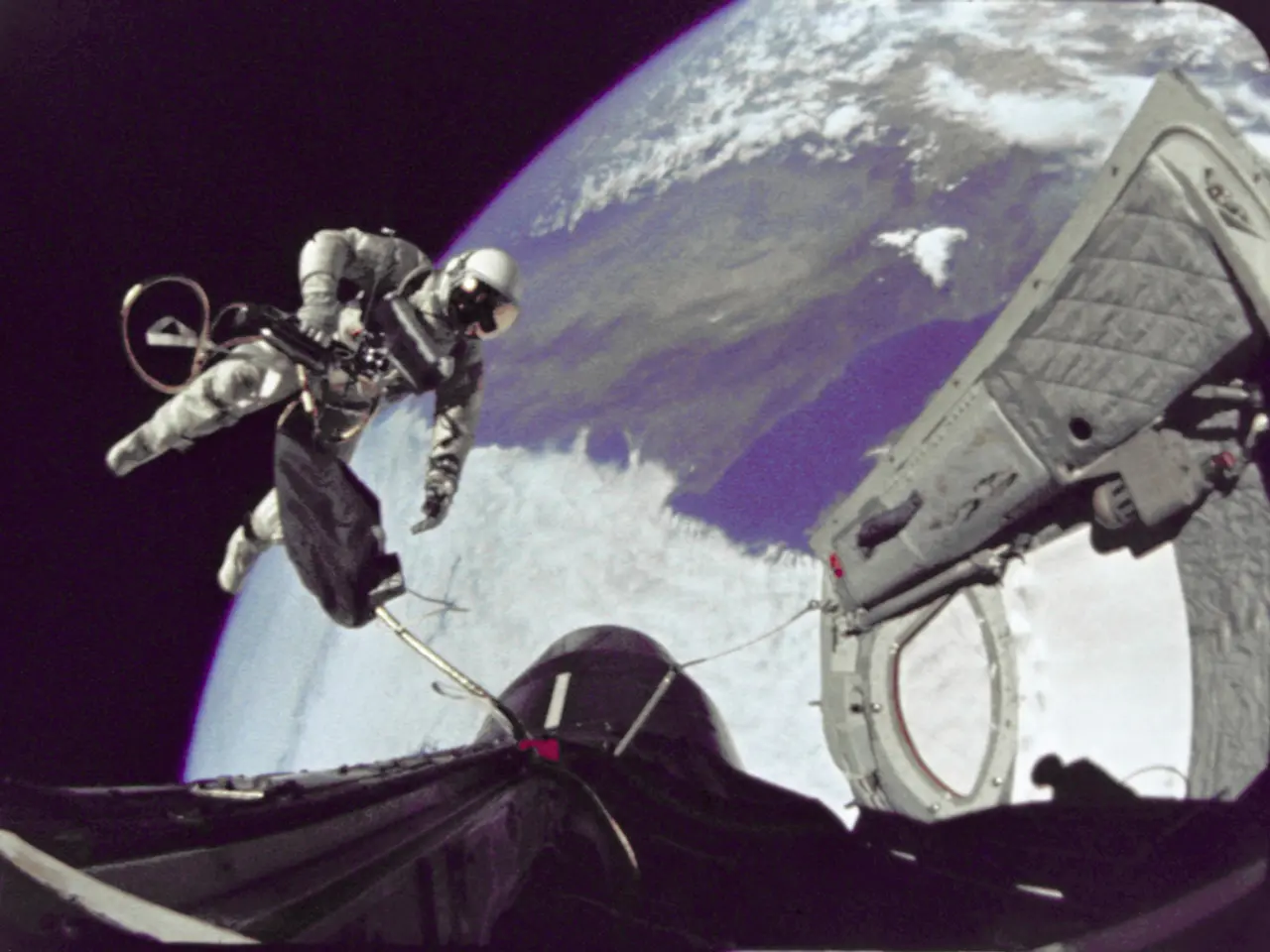
International space cooperation extended: Roscosmos and NASA reach agreement to keep the International Space Station operational until 2028.
International Space Station's Operation Extended Until 2028
The International Space Station (ISS) will continue its operation until 2028, following an agreement between Roscosmos, Russia's space agency, and NASA, the US space administration. This extension was announced by Dmitry Bakanov, the head of Roscosmos, and Sean Duffy, NASA's acting administrator, during a meeting held in the United States this week [1][2][4].
Originally, the ISS was planned to operate until 2024. However, the ongoing international commitment to the station has led to its operational timeframe being extended. The agreement between Roscosmos and NASA now sets the ISS's de-orbiting for completion by 2030 [1][2].
Although the formal agreement extends operations to 2028, discussions and intentions to use the ISS up to 2030 exist. However, no formal agreement has been finalized for that timeframe, as the decision to retire or continue operating the ISS beyond 2028 depends on joint consensus between Russia and the United States [3][4].
The ISS was set up by Russia, the United States, Europe, and Japan, and it remains one of the final areas of US-Russia cooperation amid an almost complete breakdown in relations over the Ukraine conflict. Despite challenges, the dialogue between Roscosmos and NASA has gone well [3].
It's worth noting that many Western countries have ceased partnerships with Roscosmos due to sanctions imposed following Russia's assault on Ukraine. Additionally, Russia's space programme has been affected by corruption scandals for several years and has been suffering from a chronic lack of funding [5].
The ISS has been operational since 1998, and while details about the Crew-11 mission team or SpaceX's Crew Dragon spacecraft are not mentioned in the provided paragraph, the extension ensures that the station will continue to serve as a vital hub for international space research and exploration.
In a positive development, French astronaut Thomas Pesquet has announced plans to bring Michelin-starred meals to the ISS [6]. This initiative is expected to add a touch of culinary excellence to the astronauts' experiences during their stays aboard the station.
As the ISS continues its operation, it serves as a testament to the power of international cooperation in space exploration. The extension until 2028 marks a significant milestone in this ongoing collaboration, with plans to deorbit the station by 2030.
The extension of the International Space Station's (ISS) operation until 2028 demonstrated a joint commitment between Roscosmos and NASA towards continued collaboration, despite challenges in other areas such as the Ukraine conflict and science-related sanctions. The ongoing discussions aim to use the ISS up to 2030, and this long-term operation requires technology advancements in space-and-astronomy, as well as cooperative resolutions to any potential conflicts that may arise between the international partners involved.




