
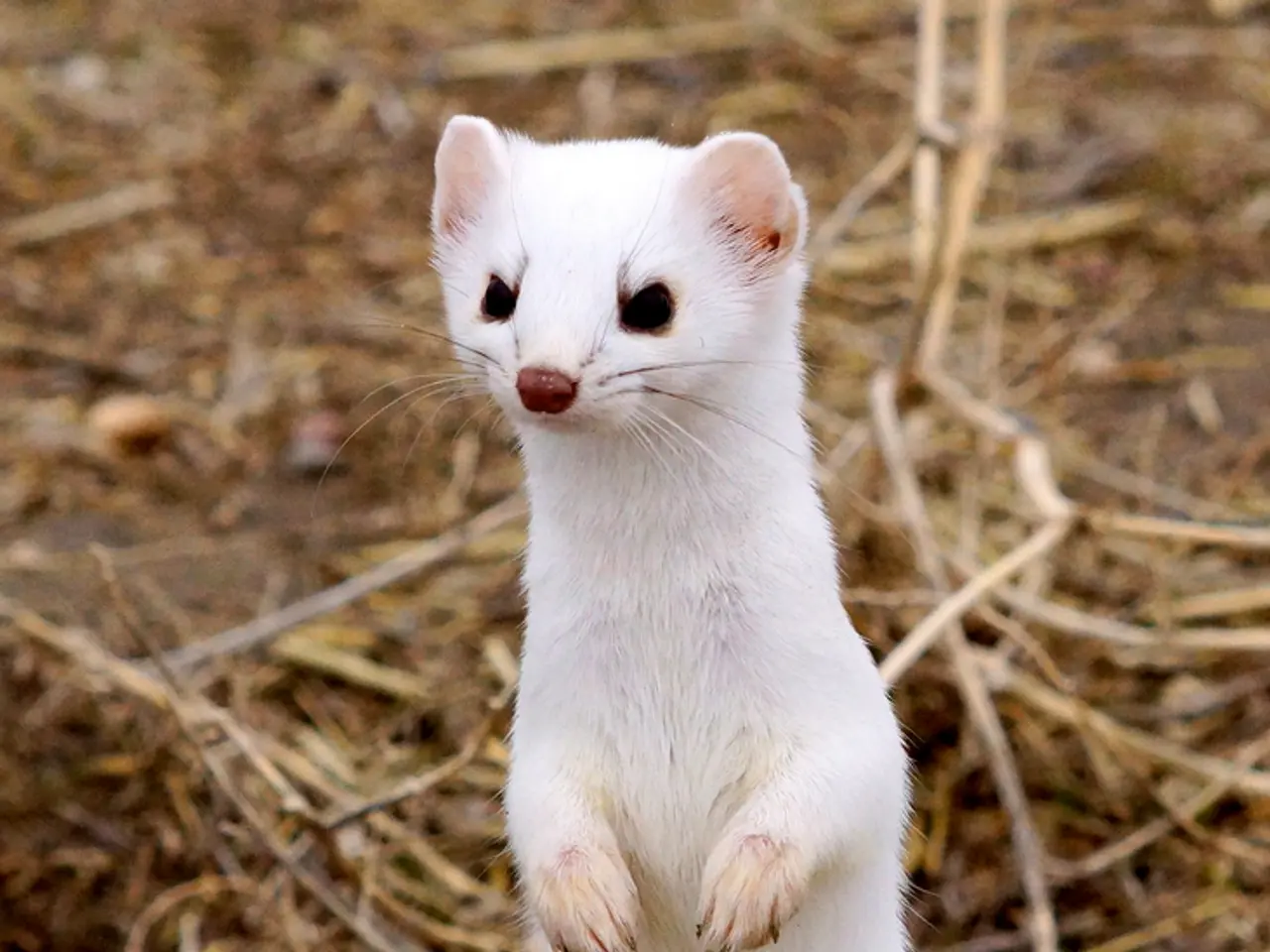
Rare sighting of miniature predator caught on trail cameras: 'Cute'
In a delightful turn of events, the least weasel, a tiny carnivore, has been spotted in South Korea's Jirisan National Park. This marks the first sighting since 2017, according to a report published on "The Cool Down" titled "Trail cameras capture rare footage of tiny carnivore not seen in years: 'It's adorable'".
The least weasel, also known as the "mouse-catching mouse" in North Korea, is up to 7 inches in length and weighs up to 5 ounces. It is native to most of Eurasia and North America, and its population is stable globally. This elusive creature is known to consume between 2,000 and 3,000 mice per year, making it a significant player in the rodent control ecosystem.
The sighting was made possible through the use of trail cameras, a non-invasive method that provides reliable data for conservationists without disturbing the animals. Instagram commenters expressed positive sentiments, describing the least weasel as adorable and cute.
While the least weasel is not currently recognised as threatened or endangered in the U.S., its protection remains a topic of discussion. A recent poll invited users to share their views on the protection of natural beauty in America. The options provided were "Definitely", "I'm not sure", "Only in some areas", "No way", and "I'm not sure".
The effectiveness of the United States in protecting native wildlife, including the least weasel and other small carnivorous mammals, appears to be mixed. While federal laws like the Endangered Species Act have been successful in stabilising and recovering populations of many species, certain federal programs, notably the USDA's Wildlife Services, actively kill millions of native carnivores indiscriminately, often with negative ecological impacts and high taxpayer cost.
However, voluntary conservation efforts like the USDA’s Working Lands for Wildlife program support habitat conservation on private lands, which benefits diverse wildlife including small carnivores by maintaining healthy ecosystems.
For those interested in learning more about conservation efforts and useful tips, subscribers were encouraged to join a free newsletter. Additionally, a list of easy ways to help oneself while helping the planet was mentioned.
The least weasel was first found in South Korea in 1927 in the northern province of Hamgyong and has since spread across the country, including Jeju Island and Ulleungdo Island. Ancient Greeks and Phoenicians are said to have used least weasels for rodent control in homes.
As we celebrate this rare sighting, let's remember the importance of conservation and the role each of us plays in preserving our planet's biodiversity.
- The use of trail cameras, a non-invasive method for data collection, has been instrumental in the conservation of small creatures, such as the least weasel, demonstrating the significance of technology in environmental science.
- With the least weasel established in various regions of South Korea, it underlines the need for ongoing conservation efforts in science and technology to ensure the future of its populations and maintain the global biodiversity of both species and ecosystems.




