
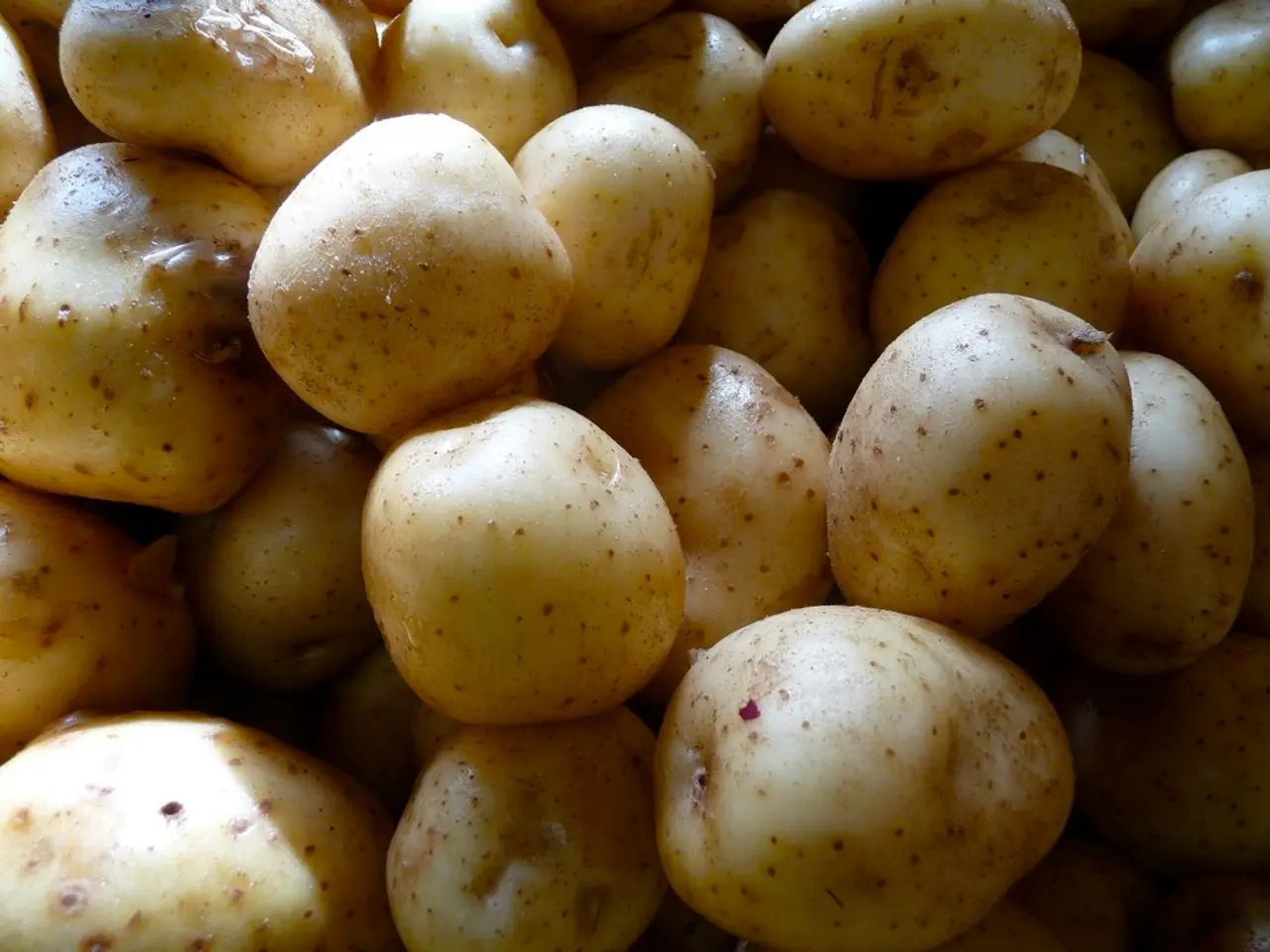
Wild tomatoes played a significant role in the 9-million-year evolutionary journey that led to today's potatoes, according to scientists' findings.
In the high altitudes of the Andes mountains, a plant that would become one of the world's most important food sources took shape. A new study has shed light on the potato's origins, revealing an unexpected partnership between the potato plant and its distant relative, the tomato.
Researchers have discovered that more than 100 wild potato species grow tubers, although not all are edible due to the presence of toxins. The study's findings suggest that the creation of the potato was the result of a bee moving pollen between two plants—one from the tomato lineage and the other from a potato-like plant called Etuberosum, around 8 to 9 million years ago.
This genetic interbreeding combined roughly 40% of genetic material from the tomato lineage and 60% from Etuberosum in the potato's genome, creating new gene combinations that gave rise to tubers, the underground storage organs characteristic of potatoes.
Key genes essential for tuber formation were inherited from both sources. The SP6A gene, a master switch initiating tuber production, came from the tomato side, while the IT1 gene, which controls the underground stem growth where tubers develop, came from Etuberosum. This combination was crucial because neither gene alone could enable tuber formation.
The evolution of tuberous potatoes coincided with the Andes rapidly rising due to tectonic plate interactions. The tuber enabled the potato's ultimate survival as it allowed the plant to reproduce without the need for seeds or pollination, a significant advantage in the harsh environment of the Andes.
The modern-day potato originated in the Andes approximately 10,000 years ago. Understanding the potato's origin story could lead to breeding more innovation into future potatoes, potentially creating varieties that are resistant to disease and shifting climate conditions.
The potato, tomato, and Etuberosum all belong to the genus Solanum, the largest genus in the nightshade family of flowering plants. The potato's lineage has remained largely a mystery due to its poor preservation in the fossil record.
The researchers used phylogenetic analyses to determine the relationships among the different plants and found that potatoes could be a sister to Etuberosums or tomatoes, depending on different genetic markers. The ancient Etuberosum and tomato ancestor likely coexisted due to climatic or geological changes.
This groundbreaking research not only offers insights into the potato's origins but also provides valuable information about other traits, such as disease and insect resistance, nutrition, drought tolerance, and many other important plant traits in potato and tomato. Understanding the potato's evolutionary history could pave the way for a more sustainable and resilient food supply in the future.
- The study's findings reveal that the creation of tuberous potatoes was the result of genetic interbreeding between the tomato and a potato-like plant called Etuberosum, around 8 to 10 million years ago.
- Key genes essential for tuber formation, such as the SP6A gene and the IT1 gene, were inherited from both the tomato side and Etuberosum, respectively.
- Understanding the potato's origin story could lead to breeding more innovation into future potatoes, potentially creating varieties that are resistant to disease and shifting climate conditions.
- This groundbreaking research not only offers insights into the potato's origins but also provides valuable information about other traits, such as disease and insect resistance, nutrition, drought tolerance, and environmental-science advantages in potato and tomato.




